


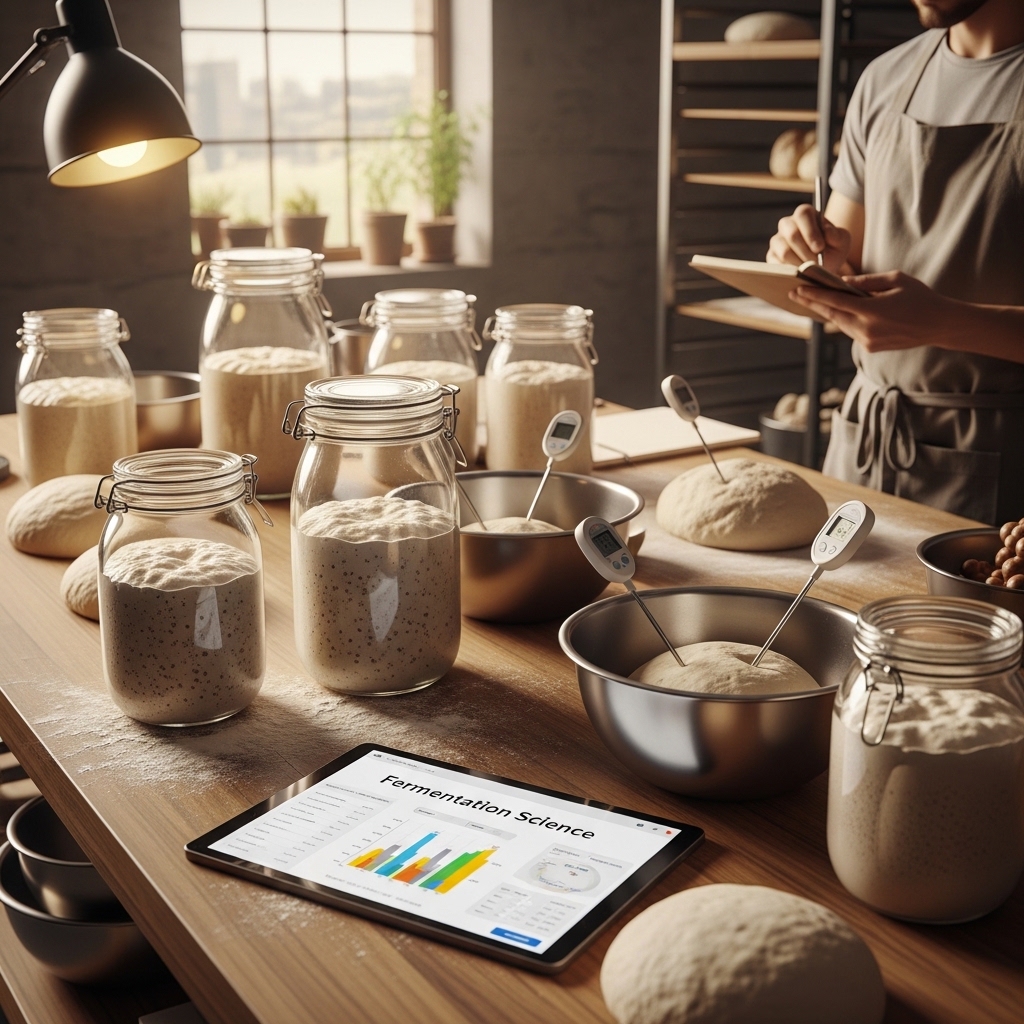
Fermentation Science for Bakers Digital Course
Quick Overview 🧪
Fermentation is not magic. It is microbiology, and understanding it will transform the way you bake. The Fermentation Science for Bakers Digital Course is an instant digital download that gives professional and serious home bakers a thorough, practical education in the science of fermentation as it applies to bread, pastry, and specialty baked goods.
This course covers the microbial ecosystem of sourdough starters, yeast biology and metabolism, lactic and acetic acid production, the role of time and temperature in flavor development, pre-ferment strategies (poolish, biga, pâte fermentée, levain), retardation science, and how to manipulate fermentation variables to achieve specific flavor, texture, and shelf-life outcomes. It is the knowledge that turns “let it rise until doubled” into a precise, controllable process.
What You Get (What’s Included) 📦
- Core Course Modules (PDF, 65+ pages total across multiple modules):
- Module 1: Fundamentals of Fermentation (what fermentation is, the role of yeast and bacteria, aerobic vs. anaerobic pathways, CO2 and alcohol production)
- Module 2: Yeast Biology for Bakers (commercial yeast types, cell structure, optimal conditions, sugar metabolism, osmotic stress, thermal limits)
- Module 3: The Sourdough Ecosystem (wild yeast and LAB identification, symbiotic relationships, starter maturation stages, regional microflora variation)
- Module 4: Acid Production and Flavor Chemistry (lactic vs. acetic acid pathways, how temperature and hydration shift the balance, pH and TTA measurement)
- Module 5: Pre-Ferments in Practice (poolish, biga, pâte fermentée, young levain vs. mature levain, choosing the right pre-ferment for your desired flavor and texture)
- Module 6: Time and Temperature as Tools (bulk fermentation manipulation, cold retardation science, warm proof acceleration, and using fermentation schedules to fit your production timeline)
- Module 7: Troubleshooting Fermentation Problems (over-proofing, under-proofing, off flavors, sluggish starters, inconsistent rise, and how to diagnose the root cause)
- Module 8: Advanced Applications (long-cold-fermented pizza doughs, fermented pastry doughs, grain porridges, sprouted grain fermentation, kvass, and beyond)
- Starter Maintenance Log (editable spreadsheet): a daily tracking template for feeding times, ratios, ambient temperature, peak activity time, and aroma notes
- Fermentation Variable Tracker (editable spreadsheet): a batch log for recording dough temperature, ambient temperature, bulk time, proof time, and final results across multiple bakes
- pH and TTA Reference Guide (printable PDF): a visual guide to measuring and interpreting pH and Total Titratable Acidity in your doughs and starters
- Module Review Quizzes (printable PDF): self-assessment questions for each module
- Recommended Reading List (PDF): curated books, papers, and online resources for continued fermentation study
Key Features ✨
- Microbiology made practical. You will understand what your yeast and bacteria are doing at each stage of fermentation, and more importantly, how to steer them toward the outcome you want.
- Flavor as a controllable variable. Modules 4 and 6 teach you to shift the balance between lactic and acetic acid using temperature and hydration, giving you direct control over your bread’s flavor profile.
- Pre-ferment decision framework. Module 5 does not just list pre-ferment types. It gives you a decision framework: when to use a poolish vs. a biga vs. a levain based on your production schedule, target flavor, and dough handling needs.
- Production schedule integration. Module 6 focuses heavily on using cold retardation and fermentation timing to bend your production schedule around your life (or your staff’s shifts), not the other way around.
- Troubleshooting from first principles. Module 7 teaches you to diagnose fermentation problems by understanding root causes (temperature, time, starter health, flour enzyme activity) rather than memorizing symptom lists.
Best For 🎯
- Professional bakers who want to move beyond “follow the recipe” into true fermentation control
- Sourdough bakers looking to understand the science behind their starter’s behavior
- Bakery owners who want to develop unique, signature flavor profiles through deliberate fermentation strategy
- Head bakers responsible for maintaining consistency across shifts, seasons, and temperature fluctuations
- Bakers exploring long-fermentation and heritage grain breads
- Serious home bakers committed to professional-level understanding
Results / Benefits 🏆
- Control your bread’s flavor profile deliberately by manipulating fermentation variables, instead of accepting whatever your starter gives you
- Maintain a healthy, predictable sourdough starter with a tracking system that reveals patterns over time
- Design production schedules around fermentation science, so your bake fits your life and your team’s workflow
- Troubleshoot fermentation problems quickly by understanding root causes, not guessing
- Develop unique pre-ferment strategies that give your breads a flavor profile competitors cannot easily replicate
- Expand into advanced applications like long-fermented pizza doughs, fermented pastry, and heritage grain breads with confidence
Digital Delivery and File Formats 📥
This is an instant digital download. Nothing physical will be shipped. You will receive immediate access to all course modules upon purchase. The course is delivered as a series of PDF modules optimized for screen reading and printing. Supplemental tools (starter log, fermentation tracker) are provided as editable spreadsheets compatible with Microsoft Excel and Google Sheets. Reference guides and quizzes are delivered as separate printable PDFs. All files are organized in a clearly labeled folder by module number.
Reviews
There are no reviews yet.